

AMERICAN ARCADIA: Smile. The Cameras Are Rolling
 Gameplay
American Arcadia is a story-driven puzzle platformer that borrows the moody, cinematic atmosphere of classics like Limbo and blends it into a small-scale Hollywood spy thriller. Instead of escaping a serial killer or a towering monster, you’re trying to survive something arguably even more terrifying: a media mega-corporation that has decided your perfectly ordinary life simply isn’t entertaining enough to keep around.
At its core, the game is essentially a walking simulator, but it’s elevated by clever environmental puzzles, satisfying platforming, and a handful of exciting chase sequences that inject bursts of tension at just the right moments. These sections help break up the slower moments and keep the experience engaging, although the pacing can occasionally feel a little drawn out.
The puzzles strike an excellent balance between accessibility and challenge. They require enough thought to make solving them satisfying, but they’re rarely so difficult that you’ll find yourself stuck for long periods. That’s an important strength for a narrative-focused game like this, as the story remains the true star of the experience while the gameplay consistently supports rather than interrupts it.

📕 STORY
Even if it’s thematically imperfect at times, American Arcadia delivers a compelling story that feels like a classic Hollywood thriller. It plays like an interactive blend of The Truman Show, The Fugitive, and Free Guy, following the painfully average Trevor as he unexpectedly transforms into an unlikely action hero while attempting to escape the seemingly perfect city-sized dome he calls home. The narrative is filled with well-timed twists and unexpected turns that continually reshape your expectations.
Much of the story’s charm comes from Yuri Lowenthal, best known as the voice of Spider-Man. His performance turns Trevor from an ordinary office worker into an instantly lovable underdog whose awkward personality and genuine reactions make him incredibly easy to root for. What makes Trevor’s journey so memorable isn’t just the thrilling escapes or the high-stakes chase sequences, it’s everything in between. The quiet conversations, the mundane routines, and the slower character moments are what give the adventure its heart. The exhilarating set pieces serve as perfect punctuation, but it’s the complete story, boring moments included, that makes American Arcadia such a worthwhile adventure from beginning to end.

🔈 Sound
To be honest, I didn’t pay much attention to the sound effects throughout my playthrough, and I think that leads to two conclusions. First, they aren’t particularly groundbreaking or memorable. Second, and perhaps more importantly, they’re polished enough that they never become distracting. In a story-driven game like American Arcadia, that’s exactly what you want. They quietly support the experience without pulling your attention away from it.
The real star of the audio presentation is the voice acting, and I suspect that was the developers’ intention all along. If so, it absolutely paid off. Yuri Lowenthal, Krizia Bajos, and Cissy Jones all deliver fantastic performances that breathe life into the characters and elevate the story to another level. Their chemistry and emotional delivery are a major reason why the narrative is as engaging as it is. I’d also like to give credit to the supporting cast. Throughout my entire playthrough, there wasn’t a single performance that felt out of place or broke my immersion. Every character, no matter how small their role, felt believable, helping sell the illusion that Arcadia is a real place hiding behind a perfect television smile.

 Visuals
Rather than chasing ultra-realistic graphics, American Arcadia embraces an elevated low-poly art style that stands out through strong artistic direction. Crisp, clean textures combined with excellent lighting create a surprisingly polished presentation, giving the world a distinctive look that feels both modern and timeless. It’s this commitment to visual identity that allows American Arcadia to separate itself from much of the competition.
What’s especially impressive is that the game was released back in 2023. Today, we’re seeing more upcoming titles, such as Replaced, embrace a similar philosophy by using modern lighting and visual effects to elevate an already distinctive art style to new heights. Looking back, it’s hard not to applaud the developers of American Arcadia for being ahead of that trend. Instead of relying on technical fidelity alone, the developers build a memorable world through clever art direction and a cohesive aesthetic. The result is a game that may not push graphical boundaries, but one whose unique visual style makes it instantly recognizable and far more memorable than many games chasing photorealism.
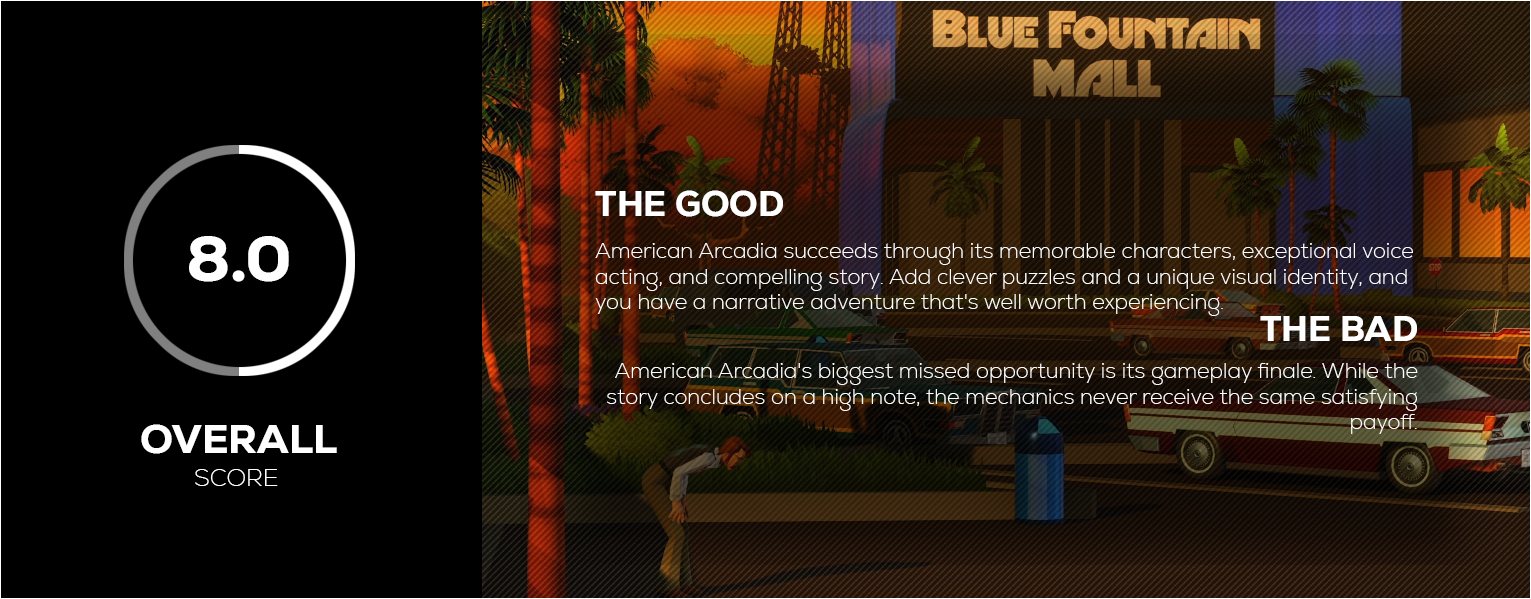
American Arcadia is an excellent narrative-driven experience that gets almost everything right. Its outstanding voice acting, distinctive visual style, and enjoyable mix of puzzles, platforming, and chase sequences come together to create a polished adventure that stands out within the genre.
That said, the pacing occasionally drags, and I would have liked to see the final chapters conclude with a few more challenging gameplay moments. I also encountered an FPS-related softlock near the end of the game that briefly interrupted the experience. Despite those issues, American Arcadia succeeds in almost everything it sets out to do. While it falls just short of the genre’s very best, its memorable characters, exceptional performances, and unique visual identity make it an easy recommendation for anyone who enjoys story-driven games.
Enjoyed the review?
For more honest reviews and recommendations,
Follow my Steam Curator
. I’ll waste my time so you don’t waste your money.
